Celebrating Bill Kincaid’s Steady Leadership
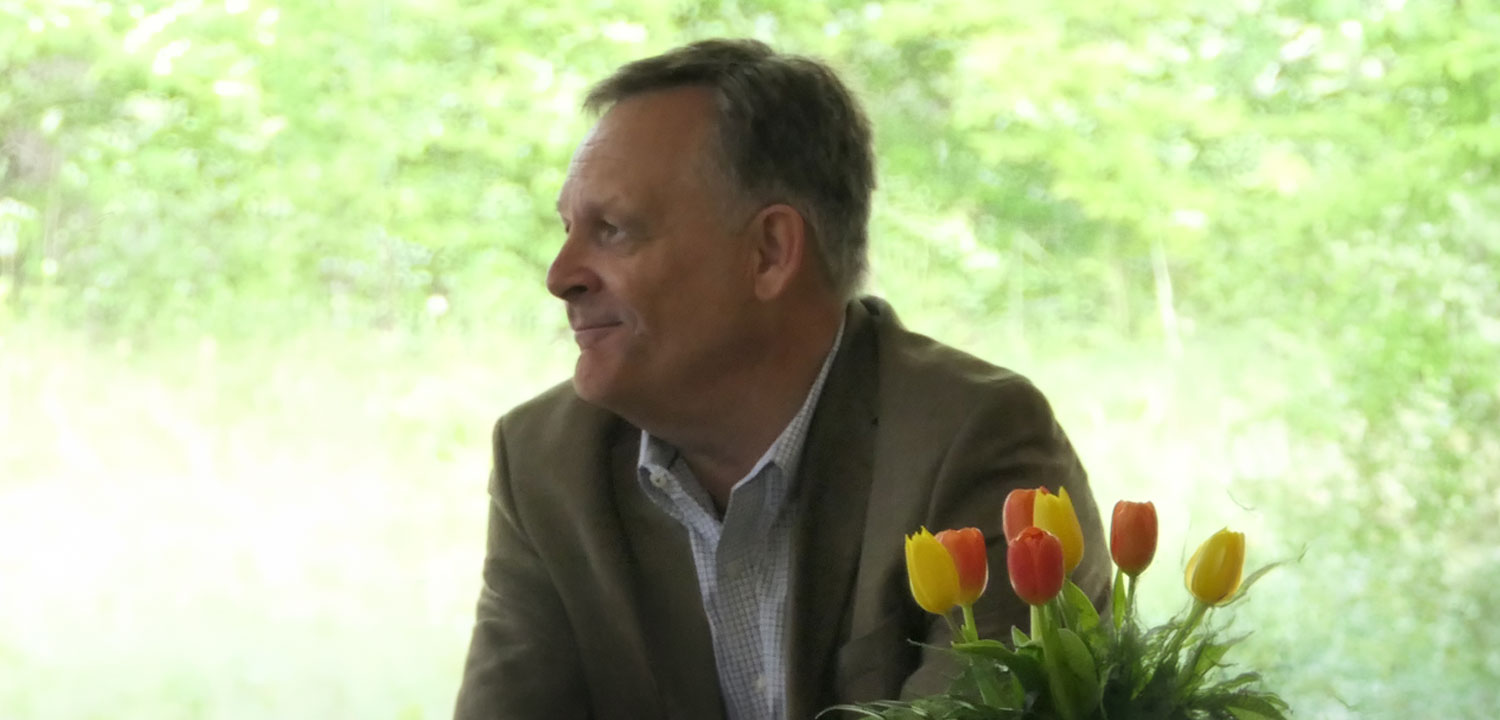
As Dr. Bill Kincaid prepares to retire from Christian Theological Seminary, colleagues are celebrating a gifted teacher, trusted leader and steady presence whose service has shaped CTS in countless ways. Throughout his time at the seminary, he has brought wisdom, humility, and a deep commitment to its mission.
Since joining CTS in 2008, Kincaid has served the seminary from an unusually wide range of vantage points. He is the Herald B. Monroe Professor of Leadership and Ministry Studies, and his prior roles include Director of Field Education, interim Dean, and interim President. From 2020 to 2025, he also developed and directed the First Season Project, a transition-into-ministry initiative supporting recent seminary graduates from around the country during their first three to five years of ministry.
An ordained minister in the Christian Church (Disciples of Christ), Kincaid has served congregations in a variety of settings. Before coming to CTS, he was senior minister of Woodland Christian Church in Lexington, Kentucky, where he received the city’s Ally for Fairness Award. He was also a founding member and later president of The Interfaith Alliance of the Bluegrass.
Kincaid is the author of four books, including his most recent, Come Again to the Circle: 40 Leaders Imagine the Church beyond COVID. He has also contributed chapters to three edited volumes and published numerous articles and sermons. He is married to Rhonda Yost Kincaid, and they have two young adult children, Andrew and Maggie.
Dr. Ron Allen, who taught Preaching and Gospels & Letters for 37 years at CTS and is now emeritus, described Kincaid as “a utility member of the CTS community” who earned the respect of faculty and administrators in every role he held. Even when Kincaid moved into administration, Allen noted, he never lost sight of faculty life or of a leader’s responsibility to help faculty members “do their optimum work and make their optimum contributions to the community.”
Allen called Kincaid one of the few people who embodies a “nonanxious presence”—a quality that proved essential during a period of uncertainty and significant change at CTS. He remembers a leader who listened carefully, spoke honestly and compassionately, kept confidence, and looked for possibilities even when negativity threatened to take over.
Former CTS Board of Directors Chair Elizabeth Klimes saw those qualities firsthand. Her service as board vice-chair and then board chair coincided with Kincaid’s two years as interim president, a period that included negotiations with Butler University concerning the campus and the unexpected departure of the previous president. “I spent a LOT of time with Bill,” she recalled. “And first of all, I have to say, it was a joy. Even if the topic was difficult, working with Bill was a pleasure, and who he is made every job easier.”
Klimes pointed to Kincaid’s intelligence and integrity, but said his humility, openness, empathy and faith made his leadership distinctive. He valued people as individuals and remained receptive to criticism and pain as well as to ideas, creativity and support. The calm he projected was neither avoidance nor denial, she said, but “a healing, strength-gathering kind of calm.”
“Being an interim leader is an incredibly difficult thing for a variety of reasons, and Bill did it beautifully,” Klimes said. “He gave CTS a real gift.” In her memorable description, his two years “calmed the seas and picked enough rocks from the soil” to prepare the way for the seminary’s next chapter.
CTS President Dr. David Mellott emphasized the breadth behind that contribution. Because Kincaid knows CTS from many vantage points, Mellott said, his “understanding of theological education and seminary life is deep and vast.” His wise counsel and healing leadership, Mellott added, helped create the foundation on which CTS continues to build today.
Dean Francisco Lozada, Jr., Vice President for Academic Affairs and professor of New Testament studies, said Kincaid’s example helped shape his own approach to leadership. “When I arrived at CTS as Dean, Dr. Kincaid did not so much give me advice as model it for me. What stayed with me most was the way he carried himself with faculty, staff, and students. He treated people with respect, and I learned a great deal simply by watching the way he engaged others. He showed me that academic leadership does not require avoiding difficult conversations or difficult decisions, but it does require approaching them with honesty, collegiality, and regard for the people involved.”
Kincaid’s influence also reaches deeply into classrooms and congregations. Allen called him a “beloved and creative teacher” with an unusually rich understanding of historic churches, the Christian Church (Disciples of Christ), and the ways congregations continue to evolve. Kincaid encouraged CTS and its students to be nimble in responding to changing circumstances, leading Allen to describe him, in the fullest sense, as “a theologian of the church.”
Allen remembers one faculty curriculum discussion in particular. As enthusiasm grew around courses that would help students pursue their passions, Kincaid called a thoughtful time-out. Would students first benefit, he asked, from gateway courses showing how Scripture, tradition, systematic theology, and ministerial practice work together? The room fell silent. Amid creative momentum, Kincaid had identified something essential—and helped shape a stronger path forward.
For all his seriousness of purpose, colleagues also treasure Kincaid’s humor. Allen recalled the subtle expressions across a faculty meeting table that sometimes forced him to leave the room to keep from laughing aloud. Klimes likewise remembered that Kincaid could see what was humorous and absurd in trying situations: “We laughed loud and often in our time together.”
Wesley Allen, Jr., the Lois Craddock Perkins Professor of Homiletics at Perkins School of Theology at Southern Methodist University, has known Kincaid since 2003, when Allen arrived at Lexington Theological Seminary and Kincaid was pastor of Woodland Christian Church. “Even though I’m United Methodist, my family and I attended there for a number of years so that I could learn more about the Disciples of Christ,” Allen said. “To this day, I consider him one of the best preachers I know.” He added with a touch of humor, “Were it not for his devotion to University of Kentucky football, I would consider him a wise man.”
One of Kincaid’s final assignments at CTS will bring his characteristic thoughtfulness to the wider community. In the CTS Talks presentation “Dignity & Community in the Hands of Empire: Caring for the Soul of the Nation,” he will consider how sustained civic engagement—rather than occasional attention in moments of crisis—can nurture well-being, inclusion, and flourishing and help shape the character of our shared life.
Allen’s portrait of Kincaid includes “that famous southern gentleness behind which there is great strength,” along with integrity, attentive listening, compassion, and a commitment to love, justice, peace, dignity, freedom, and abundance. Mellott offered an equally fitting summation of the colleague CTS now celebrates: “Gifted teacher, gracious colleague, wise confidant, and faithful follower of Christ.”