10 Lessons Learned from Faith & Action’s Fall Event
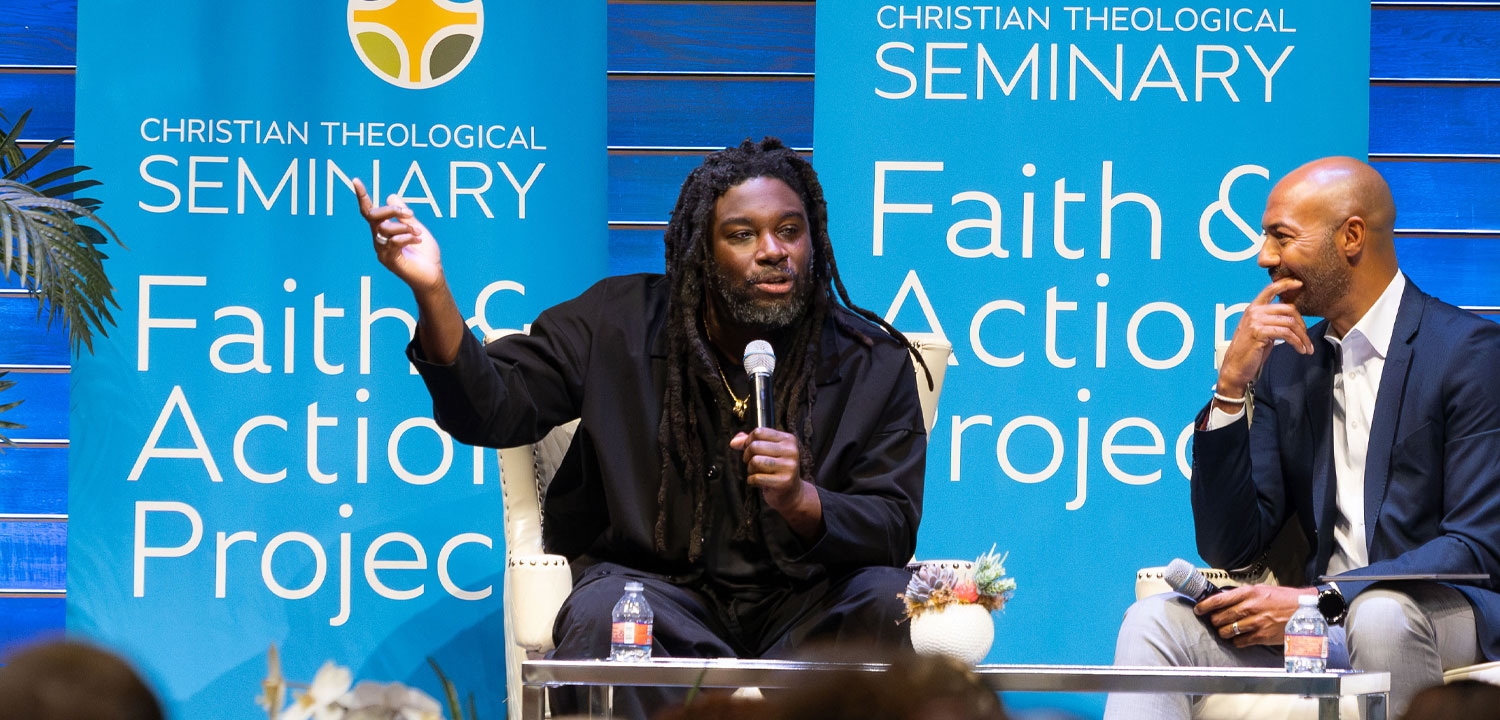
On October 27, Christian Theological Seminary’s Faith & Action Project celebrated its 10th anniversary at its annual Fall Event, “The Power of Being Seen: How Relationships Create Opportunity for Young People.” At St. Luke’s United Methodist Church, author Jason Reynolds spoke with Ahmed Young, president and CEO of The Indianapolis Foundation, about belonging, listening, accountability, and the relationships that help young people thrive. Spoken-word artist Manon Voice opened the evening with a performance about making room for young people. The lessons below reflect the ideas and challenges that emerged from their conversation.
Jason Reynolds is a passionate champion of literacy, belonging, and the power of human connection. He has dedicated his career to helping young people feel seen, heard, understood, and valued. And his conversation at the 10th Anniversary of the Faith & Action Fall Event didn’t disappoint. In fact, he was phenomenal—funny, direct, intentional, vulnerable, and unvarnished.
Jason challenged us to think differently, act differently, and carry these lessons forward in our work with young people. His message connects directly to Faith & Action’s mission of connecting, equipping, and empowering the people and organizations already working to strengthen the lives of individuals and families. Here are 10 lessons we took away from his conversation with Ahmed Young, President and CEO of The Indianapolis Foundation.
-
Gratitude is a gift we need to give young people.
“Gratitude is one of the greatest gifts we can give. And it is not a gift we often give to children. We expect it of them, but we don’t necessarily give it back.” — Jason Reynolds
Jason reminded us to make appreciation intentional. We need to tell young people what we value about them, rather than waiting for them to earn it.
-
Make room for young people—not just a seat at the table.
“Let there be room. Let us answer with a promise kept, and open door, a place right beside us. Let there be room.” — Manon Voice
Manon Voice’s spoken-word performance challenged us to create room for young people to be fully themselves. Jason expanded on this idea, reminding us that creating a sense of belonging means more than extending an invitation. It means creating spaces where young people can speak honestly, feel safe, and know they matter.
-
See the person before you judge the behavior.
Jason challenged us to slow down and look beyond what we see on the surface. A young person who is struggling, angry, or making a mistake is still a person deserving of dignity, compassion, and opportunity.
As he reminded us, we can hold young people accountable without reducing them to their worst decisions. “Ask what is happening with a young person before deciding what is wrong with them,” Jason said.
-
Our words shape how we see young people—and how society treats them.
“Don’t call kids names. When you get around your coworkers you might have to get things off your chest about the students in your class, but be careful about calling them names… That sounds pedestrian, but language is the cornerstone of culture.
Be careful calling someone a “thug.” You call it that, and that young person believes it. Whenever I see a kid in prison, it’s not that you can’t hold him accountable. But the moment I see him as a monster, a gangster, a thug, then I never see him as he is: a scared little boy without a lot of options. How do we blame kids when we’ve never given them any other options?” — Jason Reynolds
Jason’s reminder to choose language that preserves dignity and possibility was a powerful one. The words we use matter. They can reinforce labels and limit what we believe is possible for a young person—or leave room for growth, accountability, and a different future.
-
Relationships can change the way we see the world.
“Bearing witness to the lives of young people- That proximity and mindset makes me slower to judge.” — Jason Reynolds
Jason challenged us to move beyond our assumptions and see young people as human beings with their own experiences, challenges, and stories. Proximity can change our perspective. When we take the time to get to know young people and listen to their stories, it becomes harder to rely on stereotypes or assumptions.
-
Listen before trying to fix, rescue, or lead.
One of Jason’s clearest challenges was this: “People don’t need you to save them. They just need you to see them.”
He offered a simple invitation to the adults in the room: “Take a beat. Take a breath. Listen.” Ask questions before offering answers. Seek to understand before deciding what is needed. And work alongside young people rather than assuming we know what is best for them. Meaningful support begins with listening.
-
Teach young people how to use their voice respectfully.
Jason was clear that discipline is a cornerstone of love. If we want to encourage young people to have a voice, we also need to help them understand how to use it.
He tells youth, “we want you to be irreverent, but it’s about intention and plan. It’s about being a little more measured. That requires discipline. My whole life is one large act of discipline.”
Young people need boundaries and guidance, but they also need opportunities to develop their own voices, make decisions, and learn from experience. Jason shared how his mother’s willingness to let him speak up within clear expectations helped prepare him to navigate the world.
-
Accountability and compassion belong together.
Jason reminded us that young people need autonomy in ways that are safe, protected, and guided. We have a responsibility to teach them what they need to know so that, when they face difficult decisions, they have a positive voice in their heads to help guide them.
Seeing young people with dignity does not mean excusing harmful behavior or eliminating expectations. It means recognizing that young people need both freedom and guidance as they learn and grow.
The question is not whether we hold young people accountable, but whether we do so in ways that help them grow rather than convince them they are beyond redemption.
We can pair high expectations with meaningful support. We can correct behavior without withdrawing care, belonging, or hope.
-
Faith communities should be sanctuaries and part of an interconnected system of support.
“Young people want a world more safe for all the versions of themselves. Why is that controversial? Why do we judge a generation as overly empathetic? Wanting fairness?
Why does your discomfort get in the way of wanting fairness? Making room and space for people to be themselves in your churches.”
Jason challenged us to consider what it means to put faith into action. Faith communities can create welcoming spaces where young people feel safe to be themselves, while also building relationships with the people and organizations that can help meet their needs.
We are stronger when we work together—connecting young people to the resources, relationships, and networks they need to thrive. No one organization or community can do this work alone.
-
Put faith into action through small, intentional choices.
“If you want – put your faith in action. Take a beat. Take a breath. Listen. See what’s going on around you. Remember that people don’t need you to save them. They just need you to see them” — Jason Reynolds
Jason cautioned us against rushing from inspiration to action without first taking time to understand the people and circumstances involved. Meaningful change often begins with something simple: a conversation, a question, a promise kept, an open door, or the decision to show up again.
As Manon Voice reminded us, we can answer the needs of young people with “a promise kept, an open door, a place right beside us.”
Faith & Action also created the Showing Up for Young People Resource, grounded in research, evidence-based best practices, and interviews with mentoring and youth-serving organizations, to help adults and organizations build the meaningful relationships that help young people thrive.
We do not have to start from scratch or wait for a grand gesture. We can build on the extraordinary work already happening in our community—connecting, amplifying, and strengthening it so that more young people experience the relationships and opportunities they need to thrive.
Who will you see differently? Where will you make room? And what can you do to ensure the next generation is seen, supported and given pathways to thrive?