“It’s Not About You”: CTS Alum Explores Great Paradox
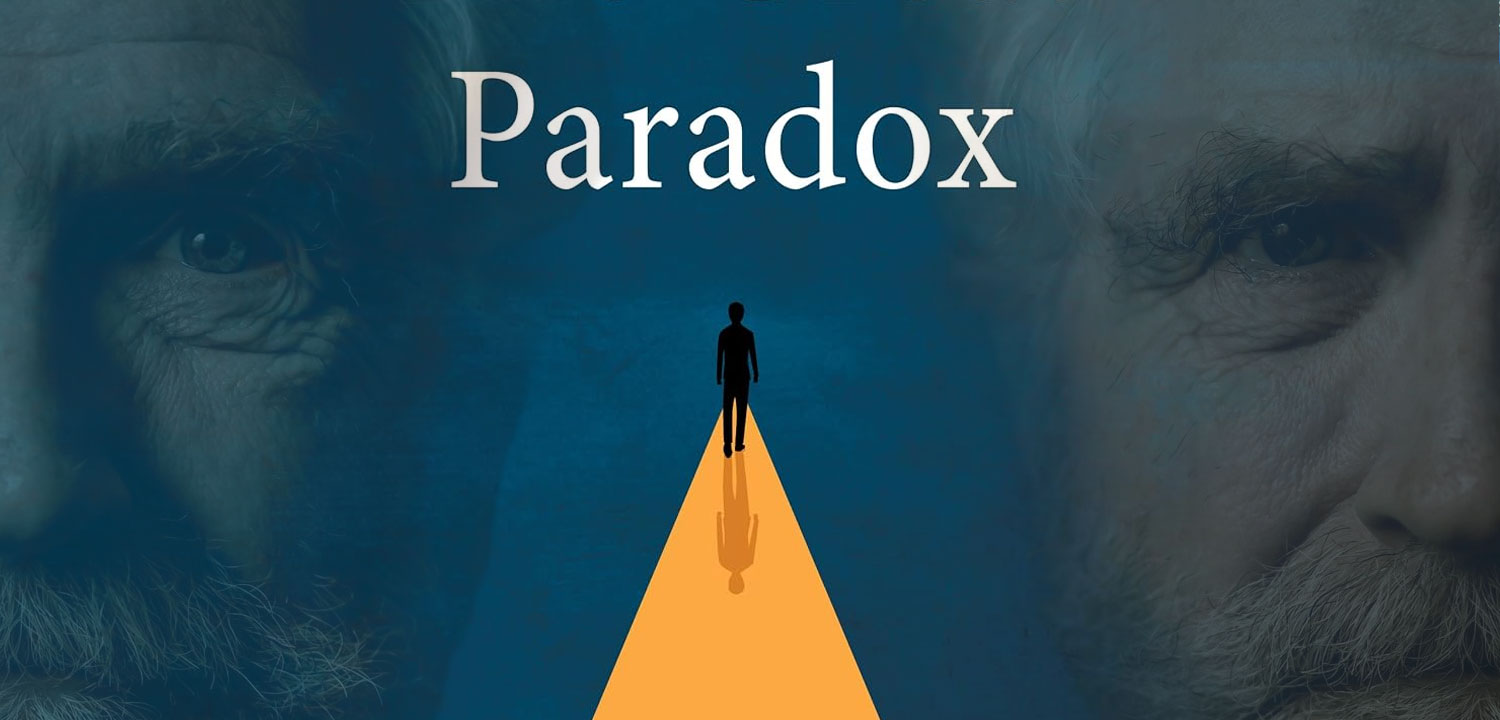
In The Great Paradox: Traveling the Narrow Way, David Avery (MDiv ’90) invites readers to reconsider what it means to follow Jesus and discover a fuller life through service to others.
“It’s not about you.”
Those four words are central to The Great Paradox: Traveling the Narrow Way, a new book by Christian Theological Seminary alum Rev. David Lee Avery (MDiv ’90).
Published by Wipf and Stock Publishers, the book explores one of Christianity’s most challenging teachings: Jesus’ declaration that those who seek to save their lives will lose them, while those who lose their lives for his sake and the gospel will save them (Mark 8:34–35).
This apparent contradiction reveals something essential about Christian discipleship. For Avery, Christianity is less about securing a place in heaven after death than about how we live in the here and now. The promise of abundant life is not simply something awaiting believers in eternity, but something discovered through setting aside self-interest, loving God, and serving others.
“Mark’s Jesus is talking about how we come alive,” Avery writes. “The paradox of the matter is that when it’s no longer about me, then life as a child of God becomes rich.”
A Message Years in the Making
The idea for The Great Paradox developed gradually through decades of ministry, biblical study, and reflection.
As Avery prepared Bible studies at First Christian Church in Jefferson City, Missouri, he found himself returning repeatedly to the passage in Mark. Other biblical texts seemed to reinforce the same message, and a pattern began to emerge.
“The idea behind The Great Paradox began to gel in the last ten years,” Avery said. His exploration of Dietrich Bonhoeffer’s The Cost of Discipleship while teaching Sunday school helped bring the pieces together.
Over the years, Avery had also collected notebooks and stacks of index cards filled with quotations, observations, and theological reflections. As he began writing, those seemingly disconnected ideas found a common purpose.
The resulting book traces what Avery calls the Great Paradox through passages from the Hebrew Scriptures and New Testament, inviting readers to reconsider the relationship between faith, self-interest, and service.
Avery believes that message is particularly relevant today.
He expresses concern about expressions of Christianity that prioritize personal reward, political influence, or national identity over the call to follow Jesus. His book challenges readers to consider whether the pursuit of power and self-preservation has overshadowed the gospel’s emphasis on love and service.
“The church’s task instead I believe is to lead the community to follow Jesus,” Avery said. “It’s about loving God, and nothing less! That might require sacrifices we must make.”
For Avery, that distinction between believing in Jesus and following Jesus is essential. Faith requires more than intellectual agreement; it calls for action.
“Following Jesus requires shoe leather, sweat, and sacrifice,” Avery said. “Above all that, it requires obedience.”
Finding Purpose Along the Narrow Way
Avery’s own journey into ministry required significant sacrifices.
After serving four years in the U.S. Navy, he pursued a career in journalism, working as a reporter and editor for approximately a decade. Although he had considered seminary earlier in life, his call to ministry took time to become clear.
In 1986, at age 38, Avery left his journalism career and moved with his family from Iowa to Indiana to attend CTS. While completing his studies, he served as pastor of a small congregation in Eaton, Indiana.
“My family made significant sacrifices for me to go to seminary at age 38,” Avery said. “I owe them everything!”
The transition was difficult, financially and personally. But Avery remembers those years as a time of profound growth.
“Those were hard days for us,” he said. “But some of my deepest learning and sense of purpose came from there.”
At CTS, Avery found mentors who profoundly influenced his understanding of Scripture and ministry, particularly professors Gerald Janzen and Ronald Allen.
Janzen’s emphasis on integrity, critical thinking, and biblical context reshaped Avery’s approach to interpretation. Allen helped deepen his understanding of the New Testament.
“My days in seminary at CTS changed my whole outlook on life and gave it purpose and meaning.” Avery said. “Moreover, my education at CTS taught me to think!”
That foundation continues to inform his writing and teaching. Avery credits CTS with helping him understand that theological inquiry is an ongoing process.
“One of the basic ideas I learned from CTS is that sometimes the questions are more important than the answers, and some of the answers are not the final ones,” Avery said. “Questions lead to relationships in ways facts cannot.”
Following his graduation and ordination in 1990, Avery served congregations in Iowa and Missouri before retiring from full-time pastoral ministry in 2015. He remains active in his congregation and continues teaching through Phillips Theological Seminary’s Center for Ministry and Lay Training, where he has taught for 27 years.
Putting the Paradox into Practice
Avery’s understanding of discipleship also shapes what he hopes to accomplish through the book.
He has pledged to donate its net royalties, after publishing and marketing expenses, to Bread for the World, an organization working to end hunger through advocacy and public policy.
“The more I wrote about the idea that ‘it’s not about me,’ the more I realized that the royalties also should not be about me,” Avery said.
For him, the decision reflects the book’s central teaching: faith finds expression in service to others, particularly those whose basic needs are unmet.
He describes the kingdom of God as a vision of a world in which everyone has a place at the table, everyone belongs, and no one goes hungry.
“If Jesus calls us to serve (and not to be served), I find issues of hunger and poverty a place to begin,” Avery said.
Ultimately, Avery hopes The Great Paradox will encourage readers to examine their own priorities, relationships, and understanding of faith.
“I hope people will begin thinking about life in a different way, in such a way that they are willing to take a chance on the One who calls us beyond ourselves toward that vision Jesus began to cast, the reign of God,” he said.
For Avery, whose path has taken him through journalism, ministry, teaching, and now authorship, that invitation remains an ongoing journey.
The Great Paradox: Traveling the Narrow Way is published by Wipf and Stock Publishers and is available through Bookshop.org and other major booksellers.