Faithful Witness in a Changing World
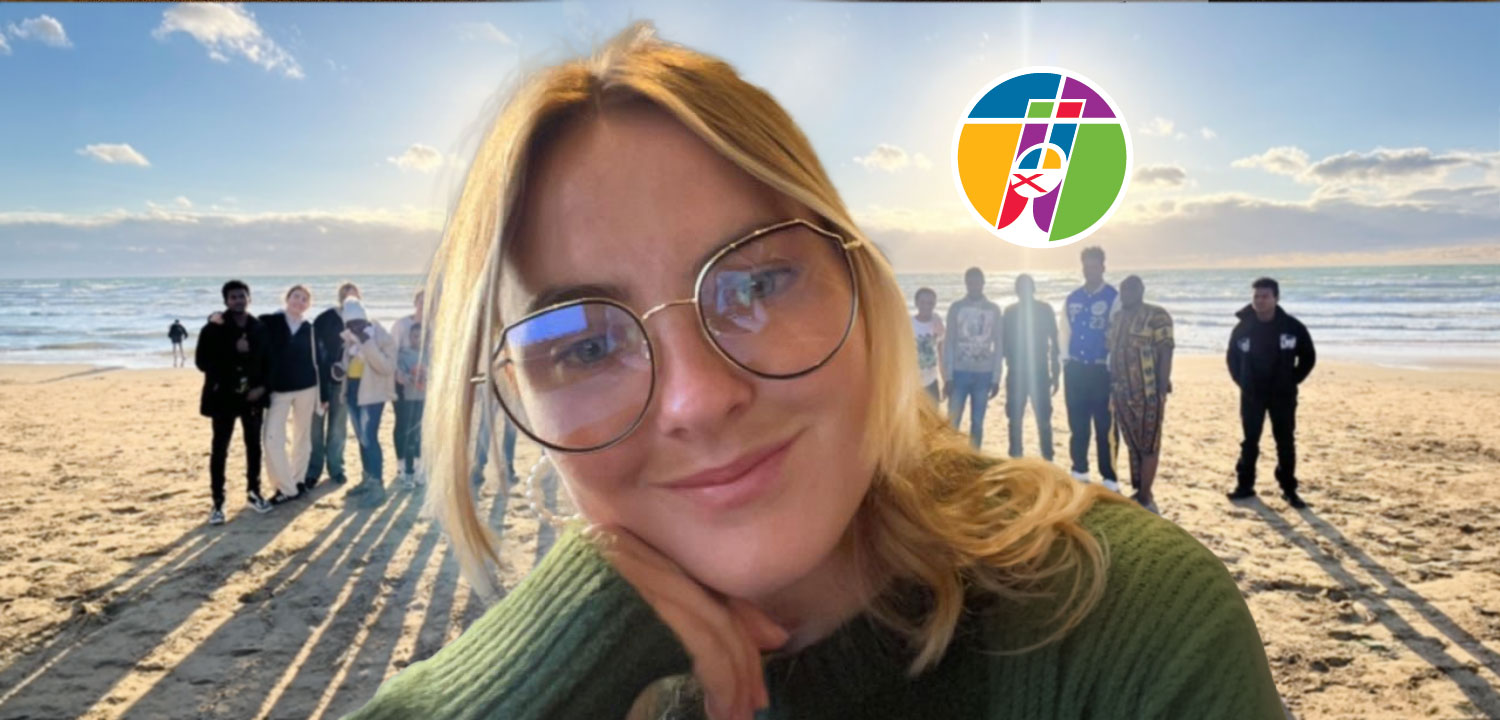
Christian Theological Seminary Master of Divinity student Margaret Kofran, 25, who expects to graduate in December 2028, is already asking the kinds of questions that may shape the future of mission: How can people of faith accompany communities on the move? How can mission reduce suffering rather than control outcomes? And what becomes possible when Christians arrive ready to witness, listen, and learn?
Margaret’s path to a Global Mission Internship with Global Ministries of the Christian Church (Disciples of Christ) began during her senior year of college, when an encounter with Week of Compassion introduced her to the program. Her discernment unfolded over two and a half years—longer than usual because she had already begun working—but the direction felt rooted in a lifelong pull toward church work and international spaces. She was excited, curious, and eager for international experience, while also willing to ask, “Is the American way of life really the best?”
She was open to serving wherever Global Ministries suggested, as long as the placement offered an opportunity to engage with immigration. For Margaret, the “space on the border” was a place to witness the full complexity of human movement. She describes a “duality of emotion” that creates compelling tension: moments of real vulnerability existing alongside joy. Her hope is to help create processes that lower the pain of migration and recognize it as a natural human response to the search for safety and resources, something people have always done.
In December 2024, Margaret began a roughly 90-day placement in Sicily with Mediterranean Hope. At the House of Many Cultures, a welcoming center for migrants, she saw how hospitality can become a form of mission—not an attempt to manage another person’s journey, but a commitment to meet people with dignity.
In March 2025, she moved to Lebanon to serve with the Forum for Development, Culture and Dialogue, contributing to project development, grant writing, and donor communications. There she learned about positive peacebuilding: the “healing” and “empowering” work of bringing people together. She came to see young people as vital participants in the future and treasured the opportunity “to learn how to create community within diversity.”
That work ended abruptly just 30 days before she would have completed a year in Lebanon. As war escalated, Margaret admits she was “in denial” and did not understand how dangerous the situation had become. Then an airstrike came so close in the middle of the night that everyone knew it was time to leave. She did not want to go, but she could not remain safe. Unable to pack everything, she made a frightening trip to the airport amid threats of further airstrikes and spent the following week in Armenia. Her parents, proud of her passion and grateful for her safety, have seen how deeply the experience matured her.
Now back in Texas, Margaret continues her Master of Divinity studies at CTS, where she expects to graduate in December 2028. After beginning her studies overseas, she appreciates being in the same time zone as her school. She is also re-engaging in immigration advocacy—her passion—while slowly discerning where her gifts can best meet the needs of her community. Through prayer, she continues to seek God’s path and opportunities to advocate for those who most need an advocate.
Her internship lessons arrived like steppingstones: God unfolded what she needed to learn as she went. Margaret believes that not being overly prepared—and even arriving with a measure of “ignorance”—left her open to being changed. That openness now shapes her vision for mission work. She wants people to let God “do his thing” rather than micromanage the process, and to enter other cultures prepared to witness and learn.
Looking ahead, Margaret sees immigration at a powerful intersection of people and systems. She believes large-scale reform will become increasingly urgent as climate change contributes to mass migration worldwide. The challenge, she says, will be finding a faithful balance between communities forced to flee and the communities receiving them.
Margaret asks for continued prayers for the Middle East, where war has not ended and the struggle remains layered. Her story also offers a broader invitation: support mission work that equips people to accompany, welcome, and learn from one another. When mission makes room for humility, peacebuilding, and local wisdom, it can help form communities capable of meeting a changing world with courage and faith.