Alumna’s Ministry of Connection, Communion, and Community
Sandy Garcia’s Ministry of Connection, Communion, and Community
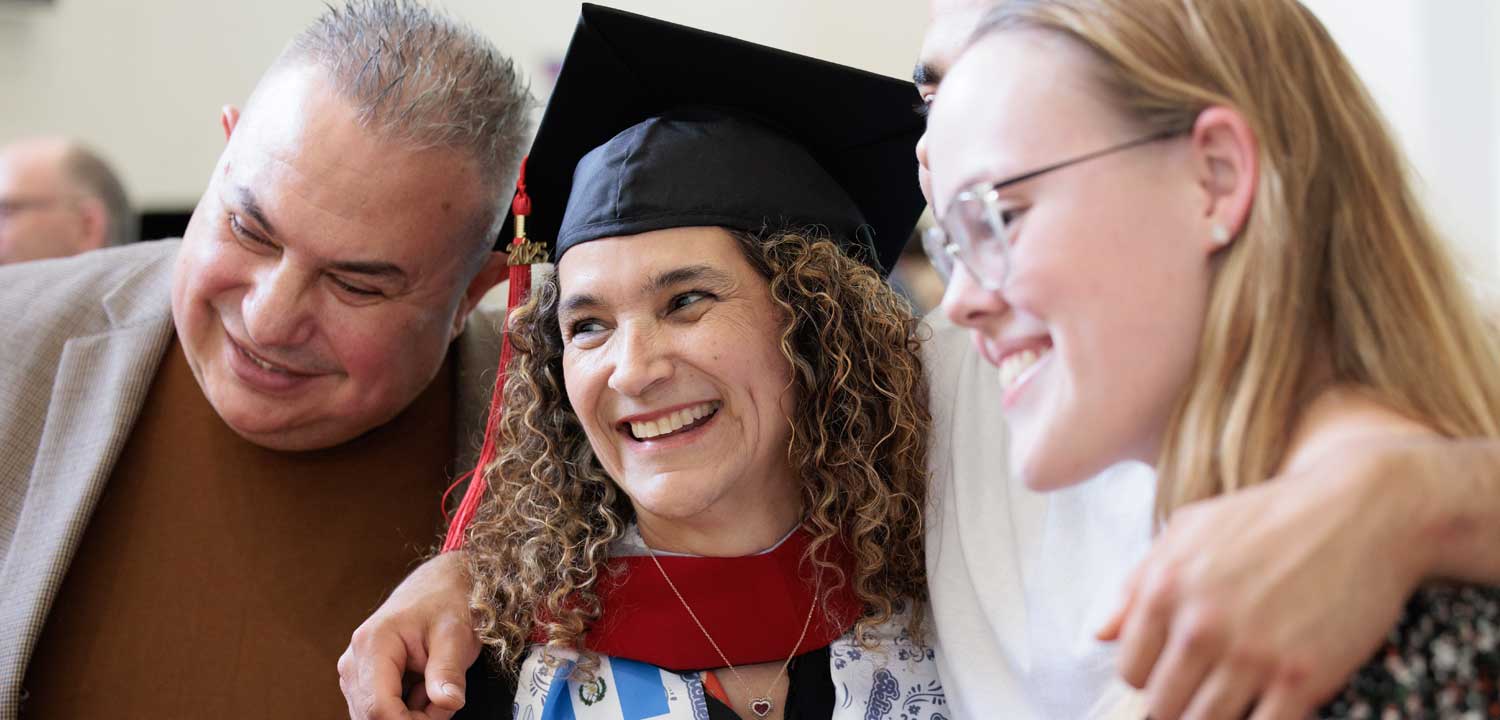
When Rev. Sandy Garcia (MDiv ’25) stood before the congregation at her ordination, she found herself at a moment she once never imagined — serving Communion for the first time as an ordained minister. Surrounded by pastors, mentors, friends, and family, she felt both the weight and the grace of the moment.
“It was powerful,” she said. “To be surrounded by so many pastors praying over me, and then to serve Communion — I felt the presence of God in a very real way.”
For Garcia, that moment marked not just a milestone, but the continuation of a journey shaped by calling, community, and a growing understanding of what it means to gather at the table.
A Growing Call to Serve
Garcia graduated from Christian Theological Seminary in 2025 with her Master of Divinity degree and is already continuing her academic journey as a Doctor of Ministry student. Her ministry, however, extends far beyond the classroom.
She currently serves part-time at two Indiana congregations — Grace Presbyterian Church in Fort Wayne and First Presbyterian Church in Bluffton — where she leads Spanish and English-language classes open to the broader community. Her bilingual ministry has become a vital bridge, connecting congregations with Spanish-speaking and immigrant neighbors.
Her work in Bluffton began during her supervised ministry placement while she was an MDiv student at CTS. The congregation recognized a growing need for pastoral leadership that could engage both English- and Spanish-speaking communities. Garcia stepped into that space — and when her placement ended, the ministry continued.
“What started as a supervised ministry placement became something much deeper,” Garcia said. “There was a clear need, and I felt called to continue serving there.”
Her recent installation as Pastor of Grace Presbyterian Church was a full-circle moment. She notes she had seen their post calling for a pastor years ago while she was a MDiv student, but she thought it sounded like a great fit. She wondered if the position would still be available after she graduated but assumed it would already be filled. As providence would have it, the position remained open despite continuing to interview candidates. They were looking for the right fit, and Sandy’s inclination was no coincidence – the pairing is a match made in heaven.
Today, her work in both congregations reflects a ministry centered on relationship-building and accessibility — creating spaces where people feel welcomed, heard, and connected.
At the center of Garcia’s ministry is a deep commitment to hospitality — creating spaces where individuals feel seen, valued, and welcomed. Whether teaching language classes, leading worship, or walking alongside individuals in moments of uncertainty, she understands hospitality as more than friendliness. For Garcia, it is a theological practice — one that reflects God’s welcome and invites people into community and belonging.
That commitment to hospitality also shapes her academic work as a Doctor of Ministry student at CTS. Her dissertation research focuses on questions that resonate deeply for her: How can the church continue to open its doors to the community? What does a ministry of hospitality and reconciliation look like in our current context? Her studies help her explore how congregations can cultivate deeper welcome and belonging, particularly among Spanish-speaking and immigrant communities.
Her studies continue to inform her ministry, helping her develop practices that foster connection, dignity, and care. “The DMin coursework has been great so far. While the MDiv follows a lot of required courses, the DMin allows me to focus on a central research topic that matters to me for my dissertation. I am able to personalize my coursework with courses that are particularly relevant to my topic,” Garcia says.
As part of her coursework, she is currently enrolled in Trauma and Theology, taught by Helene Russell, a class that is shaping her understanding of how churches can respond to individuals navigating difficult life experiences. The course has helped Garcia further consider how hospitality includes recognizing trauma, honoring dignity, and creating spaces of care and compassion.
Learning and Growing Together
Garcia’s journey at CTS has also been shaped by partnership — both in ministry and at home. Her husband, Rev. Martin Garcia, has served as a pastor for more than 30 years and is also currently a Doctor of Ministry student at CTS. The two are members of the same cohort, allowing them to learn, reflect, and grow together.
“It’s been really special,” Garcia shared. “We’re able to talk about what we’re learning, support each other, and grow together in this season of ministry.”
Their shared academic experience reflects a broader theme in Garcia’s life — ministry grounded in community, collaboration, and mutual encouragement. When asked about the unique blessings and difficulties of a marriage where both spouses work as pastors in different congregations, she shares that the experience is overwhelmingly positive. The couple supports one another in the work they do, particularly when it comes to sermon preparation.
“I will often ask Martin to listen to me delivering my sermon before it is final and give me feedback on how to make it stronger. I am able to support him in the same way. The hardest part of married ministry is making sure we set aside time every week to prioritize our relationship and connect with each other outside of ministry. Last week, we went to a movie together on a weeknight, and it was a great way to connect with no distractions.”
Expanding Outreach and Community Connection
Garcia is particularly energized by the growing outreach of both congregations she serves — especially among Spanish-speaking and immigrant communities.
Her pastoral commitment to hospitality extends beyond the church walls. In Bluffton, she works with the local court system, helping translate for Spanish-speaking individuals navigating legal proceedings. Many of those she serves, she notes, are frightened, overwhelmed, or unsure of what is happening.
“Often people will nod when asked if they understand,” Garcia said, “but they’re scared, shocked, or overwhelmed, and the information can be hard to process.”
In those moments, Garcia sees her role as more than translation. Her presence as a minister offers reassurance and dignity, reminding individuals that they are seen and valued during difficult experiences.
“It’s a way our church can serve the community,” she said. “Recognizing people’s humanity and offering hospitality in those moments can make a meaningful difference.”
At Grace Presbyterian Church in Fort Wayne, that outreach recently expanded through a new partnership with IU Health. The congregation launched a Congregational Care Network, a program designed to support individuals in the local community who are homebound.
Through the initiative, volunteers commit to making weekly one-hour phone calls or check-ins, offering companionship and encouragement. While the church has long supported members through its elders’ ministry, this new program extends care beyond the congregation’s walls.
“This is a way to meet people where they are,” Garcia said. “It allows us to connect with people we might never have known otherwise.”
The program reflects Garcia’s broader vision for ministry — one rooted in compassion, accessibility, and meaningful connection.
A Changing Understanding of Communion
Garcia’s ordination service also marked a deeply personal milestone in her spiritual journey — her evolving understanding of Communion.
She recalls a time when she struggled to connect with the ritual. While she recognized its significance, she often found deeper connection with God in other ways, such as running or personal prayer.
“I used to laugh privately with God,” she said. “I knew Communion was important, but gathering at the table didn’t feel as powerful to me as other ways I connected with God.”
Over time, however, that perspective changed.
God began to reveal the deeper meaning of Communion — as a gathering of believers, united not only with Christ but with one another. As Garcia began to experience Communion in new ways, her understanding grew.
Still, when she first considered leading Communion herself, she felt hesitant.
“I wondered who I was to lead such a powerful moment,” she said.
That hesitation gave way to affirmation during her ordination.
“As I served Communion, I felt the presence of God in a powerful way,” she said. “It was deeply affirming — a moment that reminded me that God had prepared me for this.”
True to her spirit of hospitality, Garcia made sure that Communion was accessible for everyone. She notes that gluten free options were provided, and a mobile Communion station moved around the sanctuary to those who could not come forward. Grace Presbyterian Church even makes digital communion guides available on their website alongside digital worship materials for those who join the service online.
Leadership Formed at CTS
During her time at CTS, Garcia also contributed to campus life by helping lead chapel services. That experience, she said, helped shape her pastoral voice and deepen her understanding of worship leadership.
“Leading chapel was formative for me,” she said. “It helped me grow in confidence and in understanding how worship can bring people together.”
Those experiences — combined with her academic formation and supervised ministry — prepared her for her recent ordination and installation as pastor at Grace Presbyterian Church in Fort Wayne.
Looking Ahead
As she continues her Doctor of Ministry studies and serves two congregations, Garcia remains focused on building bridges — between languages, cultures, and communities. Grounded in a theology of hospitality, her ministry reflects a deep commitment to welcoming others, honoring dignity, and creating spaces of belonging.
“There’s so much opportunity,” she said. “People are looking for connection, for community, and for hope.”
Garcia’s ministry reflects that calling — one conversation, one class, one act of hospitality, and one Communion table at a time.