Walking the Path of Exodus: Dr. Timothy McNinch Reflects on a Faith Pilgrimage Through Egypt and Jordan
Dr. Timothy McNinch admits despite his training, he still underestimates the genius of the ancients. However, following a 15-day pilgrimage to Egypt and Jordan, he was reminded of the “artistic, thoughtful, and cultured” life in antiquity.
“We were able to reflect on the intersection of the religions of ancient Egypt and our own experiences of faith,” he said. “There are many similarities. We are all imagining our place in the cosmos.”
McNinch, Assistant Professor of Hebrew Bible and Director of the Master of Theological Studies Program at Christian Theological Seminary, recently served as “scholar in residence” on a 2026 trip that was organized by the Prince of Peace ELCA Church in Dublin, Ohio. Over 30 members of that congregation traveled on what McNinch called a “faith pilgrimage in the Holy Land.”
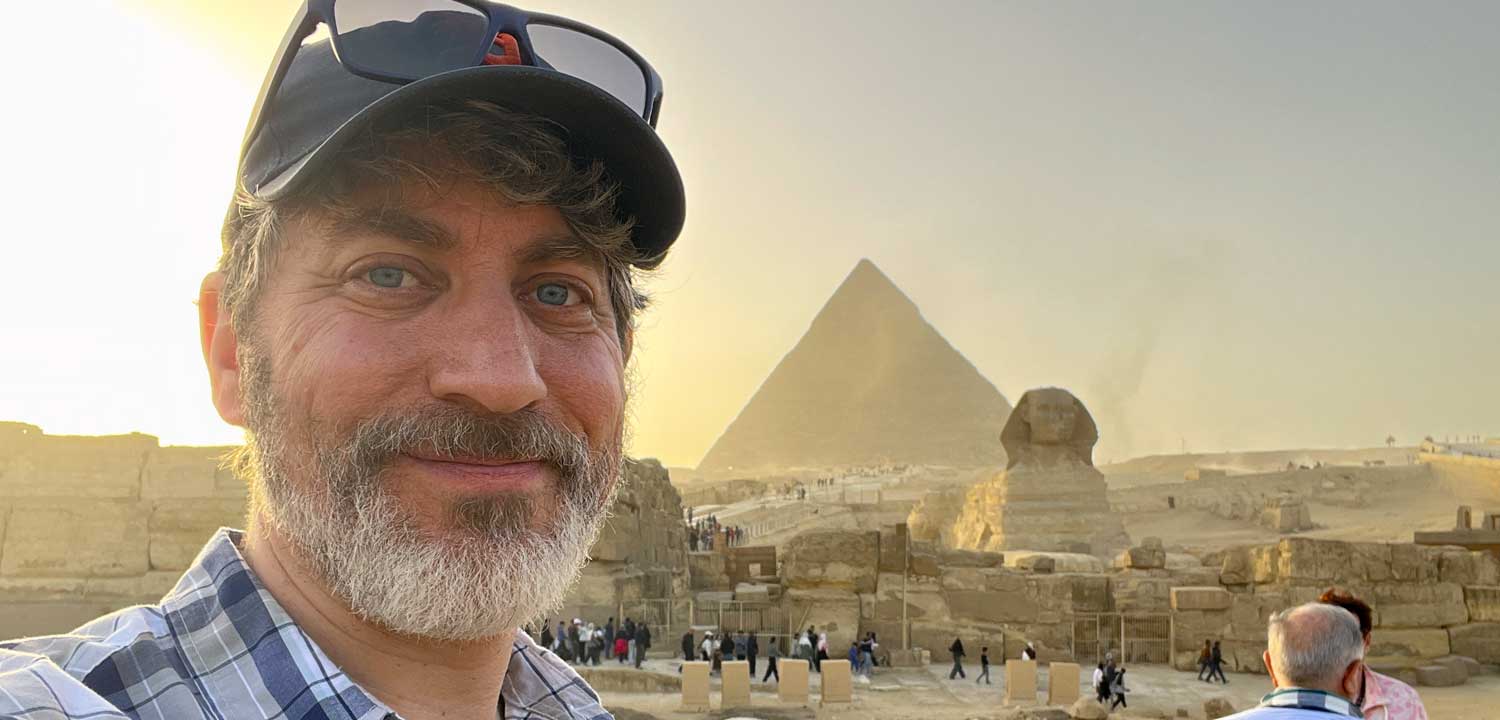
“Although we traveled by bus, plane, and boat, we essentially followed the path of the Biblical Exodus,” he said. “We climbed Mt. Sinai, saw the Red Sea, visited Mt. Nebo where Moses died – we saw some really amazing things.”
According to McNinch, he developed a fuller appreciation of how economically and culturally stable Ancient Egypt was to have such a strong infrastructure. He cited the construction of the Pyramids as one example by saying they are “baffling” in their scale and engineering.
McNinch felt the same about many of the temples that they visited. “On the surface, they seem so different from our (churches) today, but they were marking sacred space in very similar ways.”
One of the highlights of the trip for McNinch was a visit to the St. Catherine Monastery where one of the oldest surviving Greek copies of the Bible was found over 100 years ago. The “Codex Sinaiticus” was believed to have been created during the 4th century AD. This monastery claims to be on the site of the Burning Bush that Moses encountered.
The hope for any pilgrimage, McNinch said, is for the participants to experience their own faith being transformed because of the immersion. For himself, he said he feels more connected to the stories of the Hebrew Bible – which are often focal points of the classes he teaches at CTS.
“The writers of the stories, prophecies, and poems did not invent the stories in isolation,” he said. “They were regular people connecting the stories of their faith with their daily lives which helps me see the humanity in their writing. I am now someone who knows those places they are writing about.”
McNinch hopes he can lead CTS students and alumni on similar travel seminars in the future.