Behind the Scenes of Chapel Planning at CTS
Chapel Planning Invites Students into Worship Leadership and the Life of the Seminary Community
At Christian Theological Seminary, chapel is more than a weekly gathering. It is a carefully planned expression of the community’s academic life, spiritual formation, and shared commitments. For alumni and friends who wonder how worship comes together at CTS, the answer begins with collaboration.
CTS President Dr. David Mellott serves as Chapel Director and sets the chapel schedule for the year, including readings, presiders, and preachers. The process considers the lectionary, the president’s annual theme, the academic calendar, and moments in the life of the seminary community. If a retirement, community luncheon, special observance, or other shared milestones need to be held in prayer and celebration, chapel planning makes room for it.
Mellott consults with faculty colleagues including Dr. Amy Lindeman Allen, Indiana Christian Church Associate Professor of New Testament and Director of the Master of Divinity Program, and Dr. Timothy McNinch, Assistant Professor of Hebrew Bible and Director of the Master of Theological Studies Program, to help bring continuity and connection to the year’s readings and themes. In this way, chapel worship remains closely connected to the classroom while also creating space for prayer, proclamation, music, testimony, and embodied community life.
Meghan McConnell, Chapel Assistant and MDiv student, describes chapel as “the endeavor of a really great team of people.” She notes that Dr. Mellott is “very sincere, thoughtful, and considerate not only of how individual services are designed, but how community worship balances our academic experiences with the necessary spiritual formation.” His leadership, she said, keeps the chapel team “focused and grounded in the love of our liberating God.”
Rev. Ayanna L. Garrett, Associate Dean for Student Life, helps coordinate hospitality, student testimony, and other elements that make chapel worship distinctive. McConnell said Garrett brings “great energy and perspective” to the planning process, helping with behind-the-scenes connections and contributing creativity that supports the whole community’s worship life.
Music is another essential part of that shared work. Rev. John Ray, Chapel Music Director, is responsible for chapel music and musicians. According to McConnell Ray brings “a real consideration of how to set the mood for our services,” often crafting musical experiences that connect worshipers immediately to the tone and meaning of a service. Even in a chapel space that can be acoustically challenging, she said, Ray and the musicians “show up and work miracles in their ministry of song.”
For the Chapel Assistant, much of the work is logistical: coordinating with ministers, preparing the chapel space, assembling the order of worship, setting up, and tearing down. But the role also offers opportunities to contribute prayers, coordinate student ministers, and participate in the rhythms of worship. “I spent about six months learning how to sound the chapel bells before service,” she said, “but now it’s one of my favorite parts of my role.”
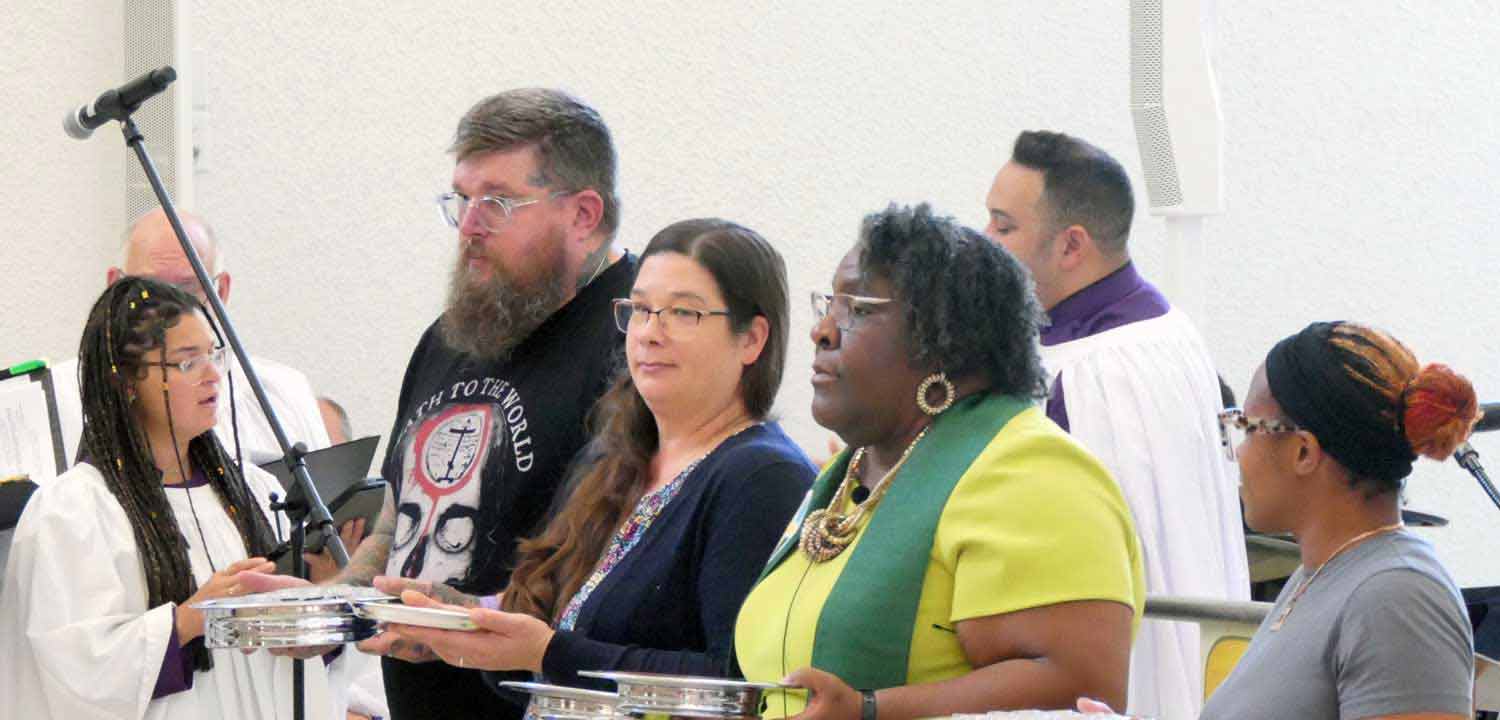
One of the clearest priorities in chapel planning is student involvement. Because CTS is a seminary, the chapel team seeks to invite students into the worship process as readers, artists, witnesses, liturgical leaders, and student ministers. Students are recruited in a variety of ways, including online signups, flyers in classrooms and student spaces, invitations connected to faculty participants, and outreach tied to monthly themes or observances.
That intentionality matters. McConnell said she tries to invite students who may not have considered serving before, especially when a theme such as LGBTQ+ observance, Black History Month, or Disability Awareness Month offers an opportunity for students to bring meaningful connections into worship leadership. “It is important to honor the ways in which we are a beautifully diverse community and to see that embodied in how we come together in Chapel,” she said.
The year’s themes can take shape in many ways. McConnell pointed to last year’s focus on stories of salvation and the recurring image of water. That theme appeared in the chapel space through a basin of water placed at the back of the room as a reminder of baptism. It also flowed through music selections such as “Wade in the Water” and “Peace Like a River,” and through the preaching and interpretation offered across different services.
The result is a planning process that is both structured and dynamic. Readings, music, testimony, preaching, calendar needs, and community gifts are all woven together in a way that reflects the life of CTS. As Mellott noted in the planning materials, the chapel team tries to use the gifts and specialties of staff and faculty, while also making space for students to lead and serve.
For alumni, chapel may be remembered as a place of music, preaching, prayer, and community. For current students, it is also a place to practice ministry, discover gifts, and join others in shaping worship. Behind each service is a team committed to making chapel a space where academic formation and spiritual formation meet.
“There is something at CTS for everyone,” Mellott said. In chapel, that spirit becomes visible: in the readings chosen, the songs sung, the students invited forward, and the community gathered in worship.