Understanding Similarities Between Theology and Conspiracy Theories Calls for Curiosity and Compassion
There may be more similarities between conspiracy theories and theology than you think at first glance, and Dr. Robert Saler, Associate Dean for Evaluation and Assessment, Associate Professor of Theology and Culture, and Executive Director of Center for Pastoral Excellence and the Lilly Endowment Clergy Renewal Programs at CTS, encourages people to be open to that discussion. “They have similar energy,” he said. “Don’t trust the mainstream, be skeptical, try to understand who/what is responsible for something” are just a few examples of how they overlap.
According to Saler, not all conspiracy theories turn out to be true just like all theologies are not good – meaning there is no universal measuring stick. He encourages people to recognize that these two mechanisms have overlapping features and may function similarly for some people.
“Our society, our culture, is forcing people to take sides,” Saler stated. “And all kinds of ideas will flourish when people are able to consume all kinds of information.” He went on to suggest that studying conspiracy theories is intrinsically an interdisciplinary topic; with psychology and sociology (for example) already at the table. Saler would like to see theology be a part of the conversation as well.
“Each (approach) can be a piece of the puzzle,” Saler stated. “I hope that both can be part of the conversation of understanding thought processes and patterns.”
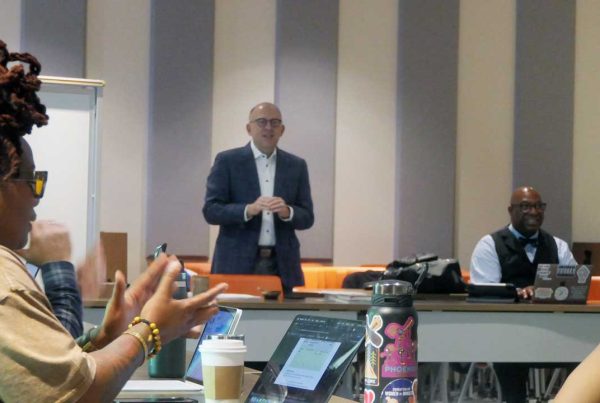
Saler is preparing for his February 3 CTS Talks: Conspiracy Theory: Can Theology Help Us Understand. This “TED Talk” style lecture will be held at 4:30 pm in Shelton Auditorium. This event is free and open to the public. Register here.
Saler’s interest in conspiracies began in 2020 during his research into the “Death to the World” movement and its relationship with Eastern Orthodoxy. He began to see similarities between the punk rock foundation of “Death to the World” and how its counter cultural energy moved into the world of conspiracy.
One example that Saler cited to illustrate the overlap that conspiracy theories and theology share is the question of evil – what is its source in the world? Does God cause or allow tragedy to occur? These questions are foundational to many theologies and conspiracy concepts.
Saler stated that theories of all kinds are a prominent part of our culture but that there is not necessarily an increase in the number of conspiracy theories right now. However, there is an increase in the number of platforms that people can access ideas and information through the internet. Through a fragmentation of the media and a variety of fringe sources, people can go “really deep” into theories that can inform their conspiracy thinking just as easily as their theology, Saler stated.
According to Saler, his working definition of a conspiracy theory involves three elements: first, a plot carried out in secret and second, something that involves a small group of people. Finally, the belief system in question works against the public good.
“Conspiracies are appealing because it makes its believers feel in control of something that seems out of control and that is powerful,” Saler said. When believers begin to make a causal explanation about what they believe, however, that is when it can cross the line out of reality.
The reason that conspiracy theories hold appeal is that there is comfort in having an understanding (or something/someone to blame in the case of a tragedy) and people enjoy being “in the know” about something. Saler suggests we look no further than the history of Christian theology to see these same components at work – to be a believers was to be in a secret group that had to remain hidden from the politically powerful and mainstream system.
Saler goes on to suggest that there is a third feature associated with conspiracy theories which make them appealing – they offer community to believers. According to Saler, the typical profile of conspiracy theory believers is not a solitary individual but someone who is well-resourced and looking for belonging. However, the deeper the person dives into the belief system, the more isolating it becomes.
At the end of the day, Saler hopes that people will stop judging conspiracy theories and theologies just as they appear on paper – neither is inherently good or bad. He encourages others to think about the formation of these ideas and consider what similar patterns and processes do they share.